Last updated: November 12, 2026
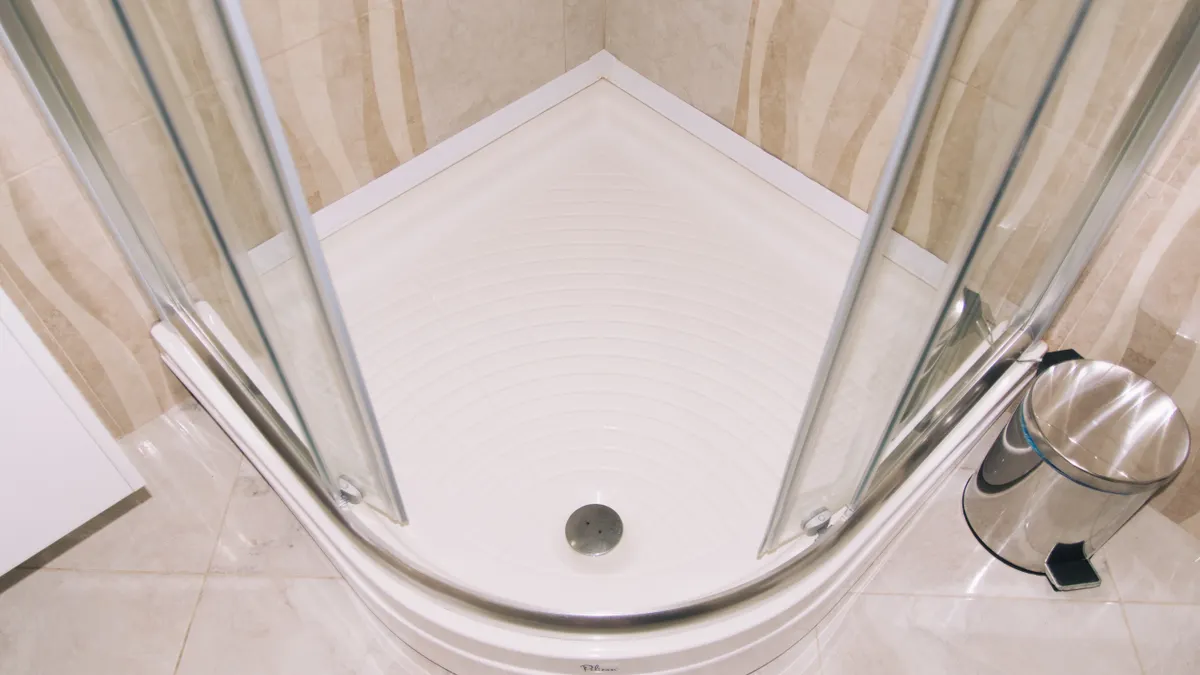
Quick answer: in most cases, a shower pan squeaks or feels flexible because of poor support underneath it, not because of the drain. This article is about why a shower pan squeaks or feels flexible and what that movement usually means. The most common causes are voids under the pan, loose fasteners, or movement in the subfloor. The sections below sort out noise, flex, and real damage.
What the squeak or flex is telling you
A squeaky shower pan usually points to movement between the pan, the subfloor, and the framing below it. The sound comes from rubbing parts; the flex comes from a gap where the pan should be firmly supported.
Picture this: you step into the shower and one corner gives a little, then squeaks near the drain. That feeling often means the pan is bending over an unsupported spot, not that the whole shower is failing. The fix depends on where the movement starts.
- Center flex often suggests poor support under the middle of the pan.
- Corner squeak often points to framing or fastener movement near the edge.
- Movement near the drain can mean the base is spanning a gap around the opening.
- A hollow sound underfoot often means a void in the bedding layer.
Here’s the catch: a pan can squeak and still be dry. A leak and a support problem are not the same issue, even though they can happen in the same shower. That separation matters because a loose support issue is handled differently from a plumbing or waterproofing problem.
If you are also dealing with broader maintenance questions, the hub on shower pan maintenance and troubleshooting should sit beside this page, not replace it.
Why a shower pan squeaks or feels flexible
A shower pan squeaks or feels flexible when the load from your body reaches parts that are not bearing evenly. In plain terms, the pan is moving because something underneath it is missing, loose, or out of plane.
Picture this: the pan was set over a subfloor with a small hump, a dip, or a gap around the drain cutout. Once the shower is used, that weak spot starts to move under your weight. The movement may be tiny, but a tiny rub can make a sharp squeak.
Common support-related causes can include:
- Improper bedding under a mortar bed or pan base
- Subfloor movement from plywood that is too thin, damaged, or poorly fastened
- Loose or missing fasteners at the flange or perimeter, where the pan should be anchored
- Improper support shims that leave a gap instead of carrying the load
- Joist deflection below the subfloor, especially where spans are long or not stiff enough
The best clue is location. If the pan feels soft in one area and firm in another, that usually means a local support issue. If the whole shower floor moves like a springboard, the problem may be farther down in the framing.
A squeak can also come from dry wood rubbing on wood. That does not mean the pan itself is cracked. It means something under or beside it is shifting by a few millimeters every time you step down.
How to tell support movement from a crack or leak
Support movement feels springy, while a crack or leak usually leaves a visual or moisture clue. If the pan flexes but stays dry and unchanged, the problem is more likely structural than waterproofing.
Picture this: you press the pan with your foot and hear a squeak, but you do not see water at the ceiling below, loose grout, or a split seam. That leans toward support movement. If you see dark staining, a soft spot, or repeated wetness, the issue may not be only support.
Use this quick check:
- Step in with dry feet and press the same spot 2 or 3 times.
- Note whether the sound comes from the same area each time.
- Look for movement at the base edge, not just under your foot.
- Check the bathroom floor around the shower for sagging or bounce.
- Listen for wood-on-wood squeak versus a sharp crack or pop.
A support problem often gives you a repeatable squeak in one place. A crack often gives you a more brittle sound and may show a visible line. A leak usually leaves another clue outside the pan itself.
The truth is, many readers jump straight to “the pan is cracked.” That guess is often wrong. A pan can feel flexible because the subfloor below it is bouncing, the bedding under it is not solid, or a fastener has backed out. Those are not the same repair.
If the movement is tied to moisture damage, the repair gets more serious. Rot changes the structure under the pan, and a simple shim may not be enough. On the flip side, a dry but noisy pan often needs support correction, not full replacement.
What to check under the shower pan before you panic
A shower pan should sit on a firm, continuous support layer with no obvious voids under the load path. If it doesn’t, it can squeak even when the finish surface looks fine.
Picture this: you pull the access panel, or you inspect from below, and you can see daylight, a gap, or a loose edge under the base. That is the kind of clue that matters. A pan does not need to be “broken” to feel wrong.
Check these points:
- Subfloor thickness: thin or damaged plywood can flex too much.
- Joists below: long spans or sagging joists let the floor move.
- Mortar bed coverage: a bed that was not packed evenly can leave hollows.
- Support shims: hard shims that miss the load path can create a squeak point.
- Fastener placement: fasteners in the wrong place can loosen the flange or edge.
If the pan is acrylic, fiberglass, or a similar lightweight base, it usually depends on full support under the bottom. A small void can feel big under a person’s weight. A mortar bed helps spread the load, but only if it was installed with continuous support and not patched in spots.
This is where many DIY fixes go wrong. Foam scraps, random wood wedges, or loose shims can create new squeaks later. The goal is not to stop the sound for one week. The goal is to make the load path solid.
A practical fix path for a squeaky or flexible shower pan
A squeaky or flexible shower pan is fixed by restoring solid support, tightening loose parts, and replacing damaged framing or bedding where needed. The right order is inspection first, correction second.
Picture this: you want the noise gone, but you also want the pan to feel solid when you step in barefoot. That means you need a repair that matches the cause, not a patch that only masks the sound.
- Find the exact spot. Step on the pan in different places and mark the squeak with tape. The goal is to localize the movement instead of guessing at the whole shower.
- Inspect below the pan. Look for gaps, cracked mortar, loose subfloor, or a missing shim. If you can see a void, you have likely found the source.
- Check the framing. Look at the joists and nearby blocking for rot, looseness, or bounce. A sound pan can still feel soft if the floor below it moves.
- Restore full support. Repack or replace the bedding layer where it has hollowed out, and add proper support shims only where they carry load cleanly. Aim for contact, not pressure points.
- Secure loose edges. If edges are loose, consult a professional or follow the pan manufacturer’s instructions before tightening or replacing any fasteners; use the correct fastener location for that pan type. Avoid overdriving and cracking the rim.
- Recheck after 24 hours. Step in again the next day. A good repair usually feels firm and quiet, with no new bounce at the same point.
Do not stuff random material under the pan from a single hole and call it done. That can create a point load, which may crack a lightweight base later. The quieter fix is the stronger one.
If the support issue is tied to a damaged subfloor or rotten framing, the repair can become a carpentry job before it becomes a shower job. That is the point where a pro with floor framing experience makes more sense than another round of trial and error.
Common mistakes that make the squeak worse
A shower pan gets noisier when someone fixes the sound without fixing the support. Quick patches often hide the symptom for a few days and leave the weak spot in place.
Picture this: you hear the squeak, slip in a shim, and the sound changes but doesn’t go away. That happens because the pan still has a gap, only now it is a different gap or a tighter rub point.
Common mistakes include:
- Adding one shim in one spot when the load needs support across a wider area
- Using soft filler that compresses and makes the squeak return
- Overdriving screws into the flange and creating stress at the rim
- Ignoring the joists and focusing only on the pan surface
- Chasing the noise with sealant when the real issue is movement below the base
The cost of these mistakes is simple: the pan keeps moving, and the movement gets harder on the material each time someone showers. A light squeak today can become a broken edge later if the load keeps pounding the same weak point.
The better move is to trace the sound, support the span, and stop guessing. If the pan is already firm in some areas and soft in one, that tells you where to work. If the whole floor bounces, the floor system needs attention before the pan will ever feel right.
When the pan is flexible but not yet failing
A flexible shower pan is not automatically ruined, but it is not normal enough to ignore if the movement is obvious. Light give from a large, well-supported base can happen; deep flex, repeated squeak, or a soft spot should be treated as a support problem, and a contractor can help assess whether the movement is within spec.
Picture this: you step in and feel a little movement, but the pan stays level, the joints stay intact, and the sound does not spread. That may mean the base is only slightly under-supported. If the flex is easy to feel with bare feet, the structure deserves attention soon.
Look for these warning signs:
- The flex gets worse over time
- The squeak is louder near the same edge or corner
- The pan feels uneven from one side to another
- The floor outside the shower starts to bounce too
- The base sounds hollow across a wider area
A small amount of movement may be corrected by improving support under the pan and stiffening nearby framing. A pan with repeated movement and visible distress is telling a different story. At that point, the question is no longer “why does it squeak?” It is “what is missing under it?”
The best outcome is often a firm pan that feels dead underfoot. Quiet. Solid. No hollow note.
Key Takeaways
- A squeaky shower pan usually points to movement, not plumbing.
- The most common causes are poor support, loose fasteners, or gaps under the base.
- The location of the flex tells you where to look first.
- Shims help only when they carry real load; random stuffing makes things worse.
- A dry squeak and a wet leak are different problems.
- If the floor below the shower bounces, the issue may be in the framing, not just the pan.
Is a flexible shower pan normal?
A little give is common in some shower bases, but obvious flex is a sign that support is missing or uneven. A pan should feel firm under normal body weight, not springy. If the movement is easy to feel or it squeaks every time, the base needs inspection.
Can a squeaky shower pan be fixed?
Yes, a squeaky shower pan can often be fixed by restoring solid support under the pan, tightening loose parts, or correcting the subfloor below it. The right fix depends on where the sound starts. If the frame or bedding is damaged, the repair is bigger than a surface patch.
Does flexing mean the pan is failing?
Flexing does not always mean the pan is failing, but it does mean something is not carrying load the way it should. A pan can flex because of a missing shim, poor bedding, or floor movement below it. If the flex keeps getting worse, the structure is likely being stressed and needs attention.
Drafted with AI; not yet reviewed by a person.
3 thoughts on “Why a Shower Pan Squeaks or Feels Flexible”