Last updated: November 15, 2026
Quick Answer: If the smell returns within 24 hours after cleaning, the problem is usually moisture, not just surface dirt. A shower pan smells musty because moisture is staying where it should dry out, and mildew or drain residue is building up in that damp spot. The smell usually comes from trapped water, a dirty drain, a clogged weep area, or poor ventilation around the pan. If the odor returns after a normal wipe-down, the problem is in the moisture path, not just the surface.
Key takeaways
- A musty shower pan smell usually points to moisture that lingers after showers.
- The drain and the weep area can smell even when the pan itself looks clean.
- Standing water, slow drying, and weak ventilation give mildew a place to grow.
- Surface cleaning alone often misses the real source.
- If the smell comes back fast, the drain or hidden moisture path is the next place to check.
Why a shower pan smells musty
A shower pan smells musty because water is sitting in the pan, under the pan, or in the drain long enough for mildew and odor to form. The smell usually means the pan is drying too slowly, the drain is holding residue, or moisture is trapped where air cannot reach it.
That smell can show up even when the top surface looks fine. A shower pan can trap water in low spots, at the edge near the drain, or around grout, caulk, or seams. If the pan is made from a material that stays damp, the odor can linger between showers and get stronger in a closed bathroom.
A quick way to think about it is this: clean surface grime smells dirty, but musty odor usually means moisture plus time. EPA guidance on mold and moisture points to the same pattern—water problems create the smell, and the smell keeps coming back until the damp source is fixed. The EPA’s guide, “A Brief Guide to Mold, Moisture, and Your Home,” is a useful reference for that moisture-first mindset.
A shower pan odor can also be a sign that the drain is not clearing fast enough. Soap film, hair, and body oils collect in the drain and hold damp debris in place. That buildup can smell sour, swampy, or musty, especially after a hot shower closes up the room.
The smell is not always caused by mold you can see. Small mildew growth can happen in hidden spots before black or green patches appear. That is why a musty shower pan should be treated as a moisture problem first, not just a stain problem; if the smell keeps returning, consider a plumber or mold professional and consult EPA guidance on moisture control.
Is the smell coming from the drain or the pan?
The smell may be coming from the drain if it gets stronger near the drain cover and weaker at the edges of the pan. That matters because the fix for drain odor is different from the fix for mildew on the pan surface.
Here is the simplest comparison:
| Likely source | What it smells like | Clues you may notice | What usually needs attention |
|---|---|---|---|
| Drain odor | Sour, stale, sewer-like, or damp | Strongest near the drain opening | Hair, soap film, standing water, trap or drain residue |
| Pan surface mildew | Earthy, musty, basement-like | Smell spreads across the pan | Moisture on the surface, seams, corners, and edges |
| Trapped moisture under or around the pan | Persistent musty smell that returns fast | Odor lingers even after cleaning | Drying, ventilation, and moisture source checks |
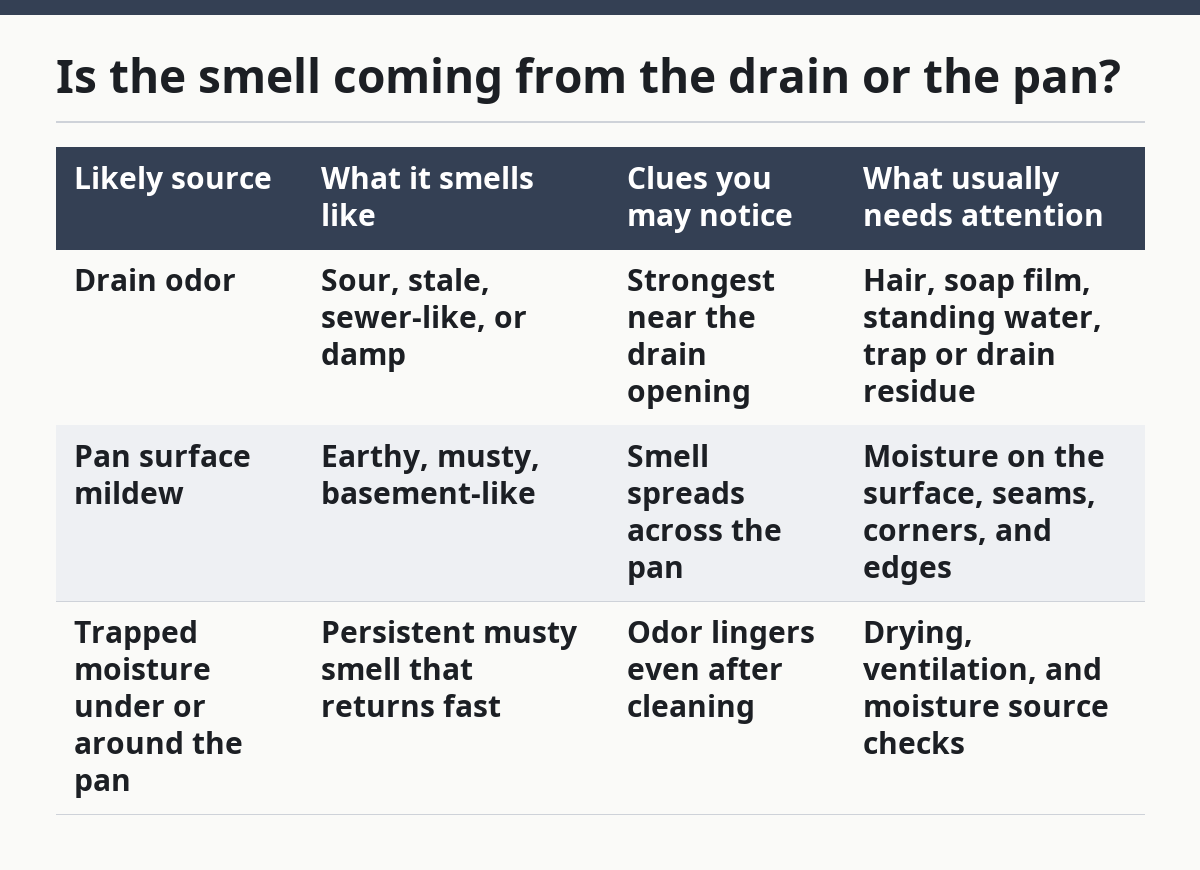
A drain smell often shows up after a shower because warm water pushes odor up from residue in the drain line. A pan smell is more likely when the surface stays damp after use. If you can smell it before the shower runs, the source is often sitting in the drain, the weep area, or another wet pocket nearby.
The drain deserves extra attention because it collects the kind of material that holds moisture. Hair mats together, soap clings to the drain walls, and that film stays wet. The smell can be especially noticeable in a shower that is used daily and dries slowly.
A pan smell that is strongest at the corners or along the base can mean moisture is trapped where airflow is weak. That is common in small bathrooms, bathrooms with poor exhaust, or showers that get closed off right after use. The odor tends to become sharper when the room stays humid for hours.
What standing water and trapped moisture do
Standing water and trapped moisture feed the smell because mildew does not need a flooded shower to grow; it only needs damp surfaces that do not dry. A little water left behind after each shower can be enough if the same spot stays wet day after day.
The shower pan is vulnerable because it is flat, often sloped only slightly, and used with running water every day. If the pan does not drain completely, water can collect at the low point, around the drain ring, or near a seam. That leftover moisture gives odor a place to settle.
Trapped moisture is a bigger issue than it looks. Water can hide under a bath mat, in a corner at the base of the wall, or around a drain edge that never fully dries. Once mildew starts, the smell can stick to the room even when the visible water is gone.
Ventilation matters because a bathroom that stays humid for 30 minutes or more after a shower gives moisture more time to linger. An exhaust fan, an open door, or a crack in a window helps the pan dry faster. Without that drying time, the same odor cycle repeats.
The trade-off here is simple: a quick rinse is not the same as a dry shower. If the pan stays wet, the smell will often return. That is why a musty odor should prompt a drying check, not only a wipe with cleaner.
How do you clear the weep area?
You clear the weep area by removing debris from the drain path so water can move out instead of sitting near the pan. If the weep area is clogged, the shower may look clean but still hold moisture where you cannot see it.
Start with a basic inspection of the drain opening and the area around it. Look for hair, soap buildup, and any ring of grime that stays damp after the shower. If the drain cover comes off easily, remove loose debris first so water can flow more freely.
A simple order of work helps:
- Turn off the shower and let the pan sit dry for a few minutes. This makes the damp spots easier to spot and keeps debris from washing deeper into the drain.
- Lift the drain cover if it is designed to come off. You are looking for hair, soap film, and any wet sludge around the opening.
- Remove visible buildup by hand or with a simple drain tool. The goal is to open the path, not to force material farther in.
- Flush the area with warm water. The drain should clear faster and leave less standing water around the opening.
- Check whether water still pools after a short run. If the same spot stays wet, the issue may be farther down the drain path or in the pan slope.
Do not mistake a clean-looking drain top for a clean drain path. The weep area can stay blocked by material below the cover. A shower pan that smells musty and drains slowly is telling you the moisture is not leaving fast enough.
EPA guidance on moisture and mold supports the same approach: fix the wet condition, not just the visible stain. The CDC also notes that mold and dampness problems are tied to moisture control, not surface appearance alone. Those are useful reference points when the smell keeps returning after a basic clean; see the EPA mold guide and the CDC guidance on mold for more detail.
What cleaning mistakes make the odor come back?
Cleaning mistakes make the odor come back when they remove surface grime but leave moisture, residue, or the drain problem in place. A pan can smell better for an hour and still be on track to smell again by the next shower.
The most common mistake is focusing only on the visible floor of the pan. That can miss the drain edge, the corners, the seam where the pan meets the wall, and the area under a drain cover. Another mistake is leaving the bathroom closed and humid after cleaning, which keeps the pan damp long enough for the smell to return.
A few habits can make the problem worse, so if the odor keeps returning, consider a plumber or cleaning professional and check the drain path:
- Rinsing but not drying the pan
- Cleaning the top surface while ignoring the drain
- Leaving a bath mat bunched up over a damp section
- Shutting off airflow right after shower use
- Treating a musty smell as if it were only soap scum
The cost of these mistakes is time. You can scrub the pan 3 times and still keep the same odor if the drain or moisture source remains. The smell then seems mysterious when it is really following the same wet pattern.
A better approach is to think in two parts: remove the grime, then dry the system. That means the pan surface, the drain area, and the room itself all need attention. If one of those stays wet, the odor can keep coming back even after a thorough wipe-down.
This is also where the issue stops being a “just clean it harder” problem. If the smell is strongest near the drain, returns within a day, or gets worse in humid weather, the source is probably deeper than the surface. That is a moisture issue, not a polish issue.
How do you keep the shower pan from smelling musty again?
You keep the shower pan from smelling musty again by drying it faster, reducing standing water, and keeping the drain path clear. The goal is not a one-time scrub. The goal is a shower that does not stay damp long enough for odor to settle in.
A few habits make the biggest difference:
- Squeegee or towel off visible water after use
- Leave the door open or run the exhaust fan long enough for the room to dry
- Keep the drain free of hair and soap film
- Check low spots where water pools
- Move bath mats so damp spots can air out
A bathroom that dries quickly gives mildew less time to grow. That matters because musty odor thrives in slow-drying spaces. If the pan is clean but the room stays humid for a long stretch, the smell can come back even without visible grime.
The shower pan itself also needs room to dry evenly. A pan that holds water at one edge or around the drain should not be treated like a normal drying surface. That pooling is part of the odor problem. The faster it clears, the less chance the smell has to return.
The plain truth is that a musty shower pan is usually a moisture-management problem, not a mystery smell. If you want the bigger maintenance picture, the shower pan maintenance and troubleshooting hub fits this topic well.
When does the smell point to a bigger problem?
The smell may point to a bigger problem if it returns quickly after cleaning, stays strongest near the drain, or comes with persistent wet spots. In that case, the odor is probably being fed by ongoing moisture rather than by surface dirt alone.
That does not automatically mean the pan needs replacement. It does mean the source may be deeper than a normal wipe-down can reach. A drain issue, hidden mildew, or poor drying conditions can all keep the smell alive.
If the odor is paired with water that will not clear, soft spots, or other signs of dampness outside the shower pan, the problem needs closer attention. EPA guidance on moisture problems is useful here because it treats dampness as the root issue, not the smell itself. If those signs continue, consult a professional.
The limit of a simple odor fix is clear: if the pan keeps smelling musty after the drain is cleaned and the room is drying properly, there is likely another source in the moisture path. At that point, guessing gets expensive in time and frustration.
Why does my shower smell even after cleaning?
Your shower can still smell after cleaning because the odor source is deeper than the visible surface. A drain, a weep area, or trapped moisture can keep feeding the smell even when the pan looks clean. If the room stays humid or water pools in one spot, the smell can return fast.
Can a shower pan cause sewer smell?
Yes, a shower pan can seem like it causes a sewer smell when the real source is the drain or trap area. The odor can move up through residue, standing water, or poor drain flow. A musty smell and a sewer smell are not the same, but both can start at the drain.
How do you get rid of musty shower odor?
You get rid of musty shower odor by removing the moisture source, not just masking the smell. Clean the drain area, clear visible buildup, and let the pan dry fully after each shower. Good airflow matters as much as cleaning because mildew and odor return quickly in a damp bathroom.
Drafted with AI; not yet reviewed by a person.
3 thoughts on “Why a shower pan smells musty”