Last updated: November 16, 2026
Quick Answer: In many showers, only 3 areas need opening—the pan, the drain, and the lowest wall finish—so the whole bathroom does not have to come out. The goal in how to replace a shower pan without tearing out the whole bathroom is not to leave everything untouched; it is to remove only what blocks the pan, reset the base, and repair the finish around it.
Key takeaways
- A shower pan replacement is usually a partial demolition job, not a full-bathroom teardown.
- The drain connection, the pan edge, and the waterproof membrane decide how much must come out.
- Tile near the bottom row often has to be removed if it locks the pan in place.
- Bad reassembly shows up as soft floors, leaking seams, uneven drain fit, or cracked finish work.
- If the waterproof layer or subfloor is damaged, the job grows fast and needs more repair than a simple pan swap.
What has to come out?
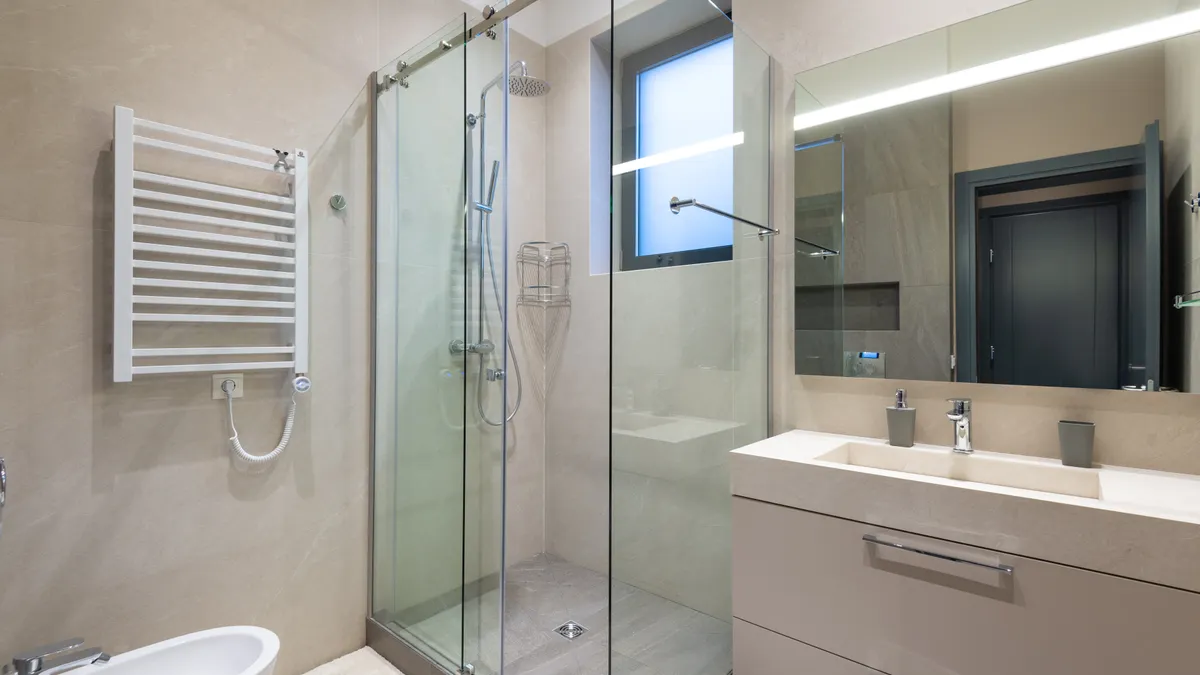
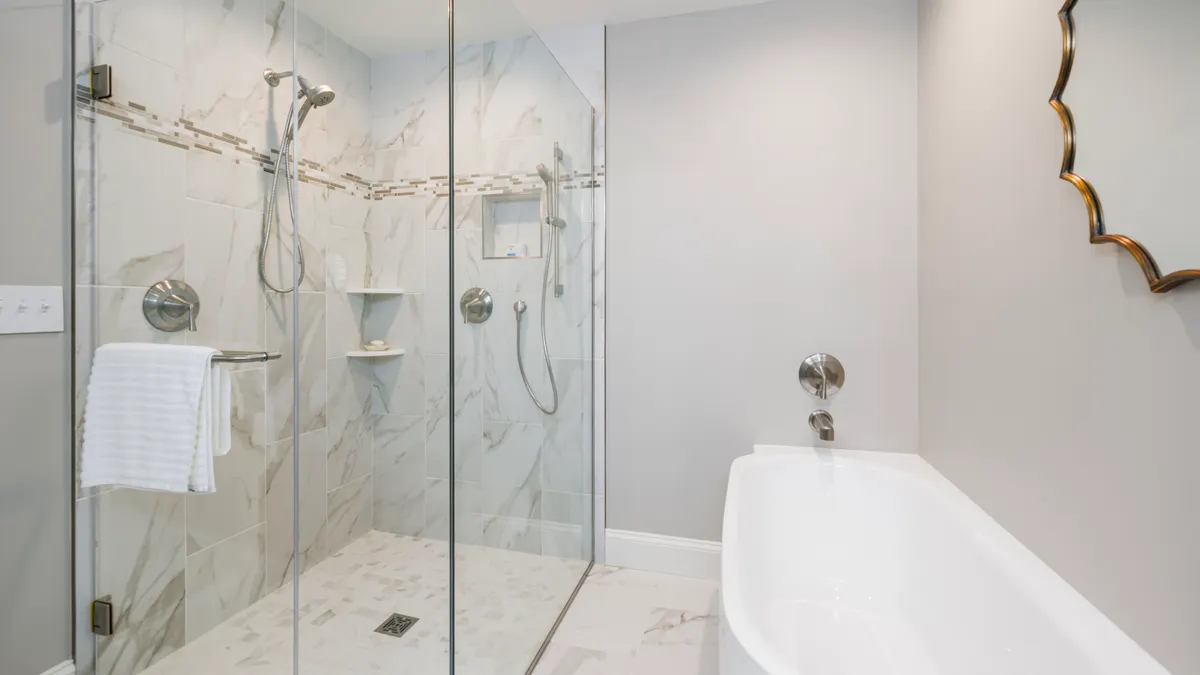
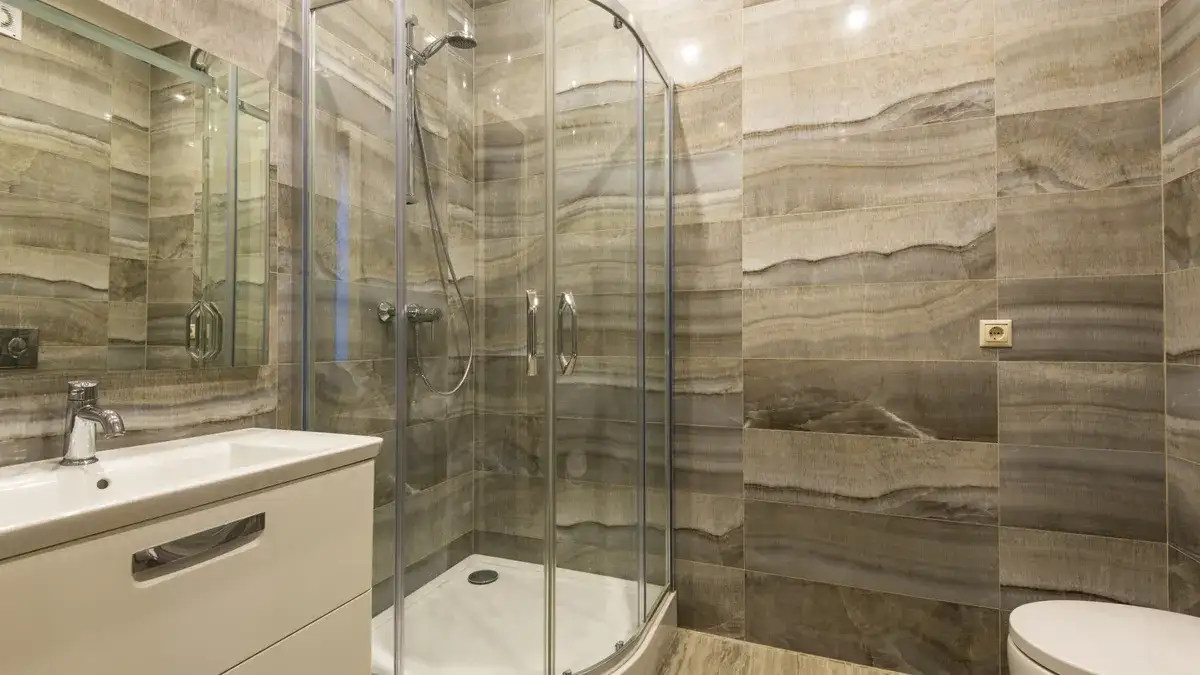
A shower pan replacement usually starts with the lowest parts of the shower, not the whole room. The pan, drain connection, and any finish material that locks the pan to the walls are the main pieces that come out.
In a tiled shower, the bottom row of tile often covers the pan flange or overlaps the waterproof membrane. That means a small strip of tile may need removal before the pan can slide out cleanly. In a fiberglass or acrylic shower, the walls may stay in place if the pan was built as a separate base and the drain can be disconnected from below or through an access opening.
The line between “small repair” and “major tear-out” is usually the waterproof membrane. If the membrane behind the tile is tied into the old pan and is still sound, the finish repair can stay limited to the bottom few inches. If the membrane is torn, moldy, or built wrong, the replacement may spread upward because the new pan needs a reliable waterproof tie-in. For mold concerns, see the CDC’s guidance on damp indoor spaces and mold cleanup: https://www.cdc.gov/mold/
A simple way to think about the scope is this: the more the pan is trapped by the walls, the more finish work comes with it. A shower pan is not like swapping a drain cover. It sits at the bottom of a water system, and that system has to be opened enough to make a watertight reset.
How do you replace a shower pan without gutting everything?
You replace a shower pan without gutting everything by opening only the drain, the pan edge, and the bottom wall line, then rebuilding those parts in the same footprint. The rest of the bathroom can usually stay in place if the subfloor is solid and the wall system is not damaged.
For example, the usual path for a partial replacement is below:
- Turn off water to the shower valves if nearby piping or trim might get bumped, then remove the drain cover and inspect the drain body from below or through the access point. The goal is to see how the pan is tied to the drain before anything is pried loose.
- Remove the lowest finish pieces that trap the pan, usually the bottom row of tile or wall panels. Keep the cut line neat and level, because that edge will show after the new pan goes in.
- Disconnect the drain from the old pan. In many showers, this is the point where the pan separates from the clamping drain or drain assembly, and the old base can finally come out.
- Cut and lift the old shower pan out in sections if needed. A one-piece pan often has to be broken apart to clear the framing, especially in a tight alcove.
- Inspect the subfloor and framing under the pan. The surface should be firm, dry, and even enough to carry the new base without bounce or soft spots.
- Reset the new pan in the opening and align it with the drain. The drain opening has to land cleanly so the pan sits flat and the waste connection seals properly.
- Reconnect the drain, then check the pan for stable support and proper slope to the drain. The base should not rock, dip, or leave a gap at the edge.
- Repair the exposed wall edge, waterproof membrane tie-in, and finish material around the pan. The visible repair should be tight, level, and sealed where the pan meets the wall.
That is the clean version of the job. The reality is that a lot depends on the shower build. If the pan was installed before the walls were finished, replacement is simpler. If the pan was buried behind tile and membrane layers, the pan can still be replaced without tearing out the whole bathroom, but the lower wall finish almost always has to be disturbed.
Because of that, the most important thing to avoid is forcing a new pan into a damaged opening. A pan that fits poorly at the drain or sits on a weak subfloor will fail faster than the old one. Partial demolition saves money only when the opening is still sound. For code context on shower receptor and lining requirements, see the ICC code portal: https://codes.iccsafe.org/
Which parts can stay in place?
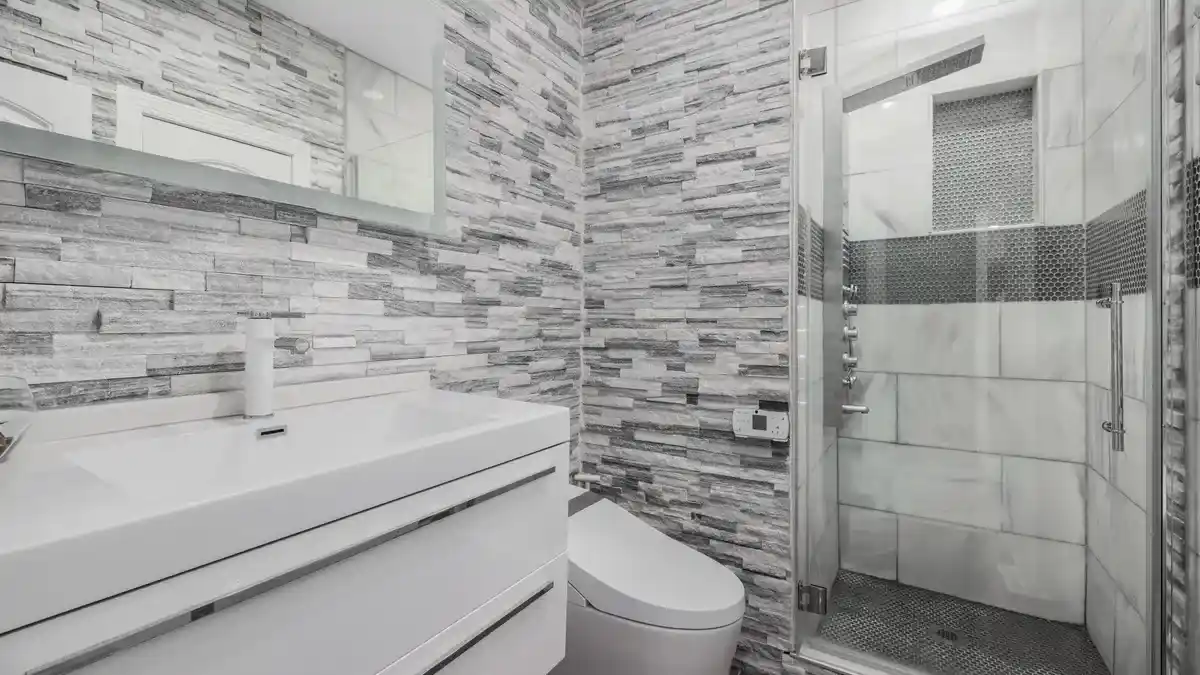
The upper walls, shower valve, and most of the bathroom floor can often stay in place if the failure is limited to the shower base. That is what makes this a replacement, not a remodel.
What stays depends on how the shower was built. If the tile wall is intact above the bottom row, the upper field tile can usually remain. If the shower door frame is mounted above the pan line, it may stay too, although the lower track sometimes has to come off. The toilet, vanity, and main bathroom floor normally do not need removal unless the shower sits in a cramped corner that blocks access.
The parts most likely to come out are the pan itself, the drain connection, the lowest wall finish, and any trim that overlaps the pan edge. That includes caulked seams, base trim, and sometimes a small section of cement board or backer near the bottom.
Here is the practical trade-off: leaving more in place shortens the job, but it raises the risk of hidden damage staying hidden. If the old pan leaked long enough to soften the subfloor or wet the wall cavity, keeping the rest of the bathroom intact may look cheaper on day one and cost more later. A good contractor should explain where the damage stops and where the repair starts.
What does a bad replacement look like?
A bad shower pan replacement usually shows itself at the drain, the wall edge, or the floor under the pan. Those are the places where mistakes cost the most.
Watch for these warning signs after the job:
| Problem | What it often means | Why it matters |
|---|---|---|
| Pan rocks or flexes under weight | Poor support or uneven subfloor | Movement breaks seals and cracks finish work |
| Water pools away from the drain | Wrong slope or wrong drain alignment | Standing water shortens the life of the pan |
| Gaps at the wall edge | Bad fit or sloppy finish repair | Water can get behind the wall surface |
| Loose or cracked bottom tile | Pan line was cut badly or not supported | The finish may fail before the leak is visible |
| Musty smell or soft floor nearby | Old water damage was left in place | The hidden rot can spread beyond the shower |
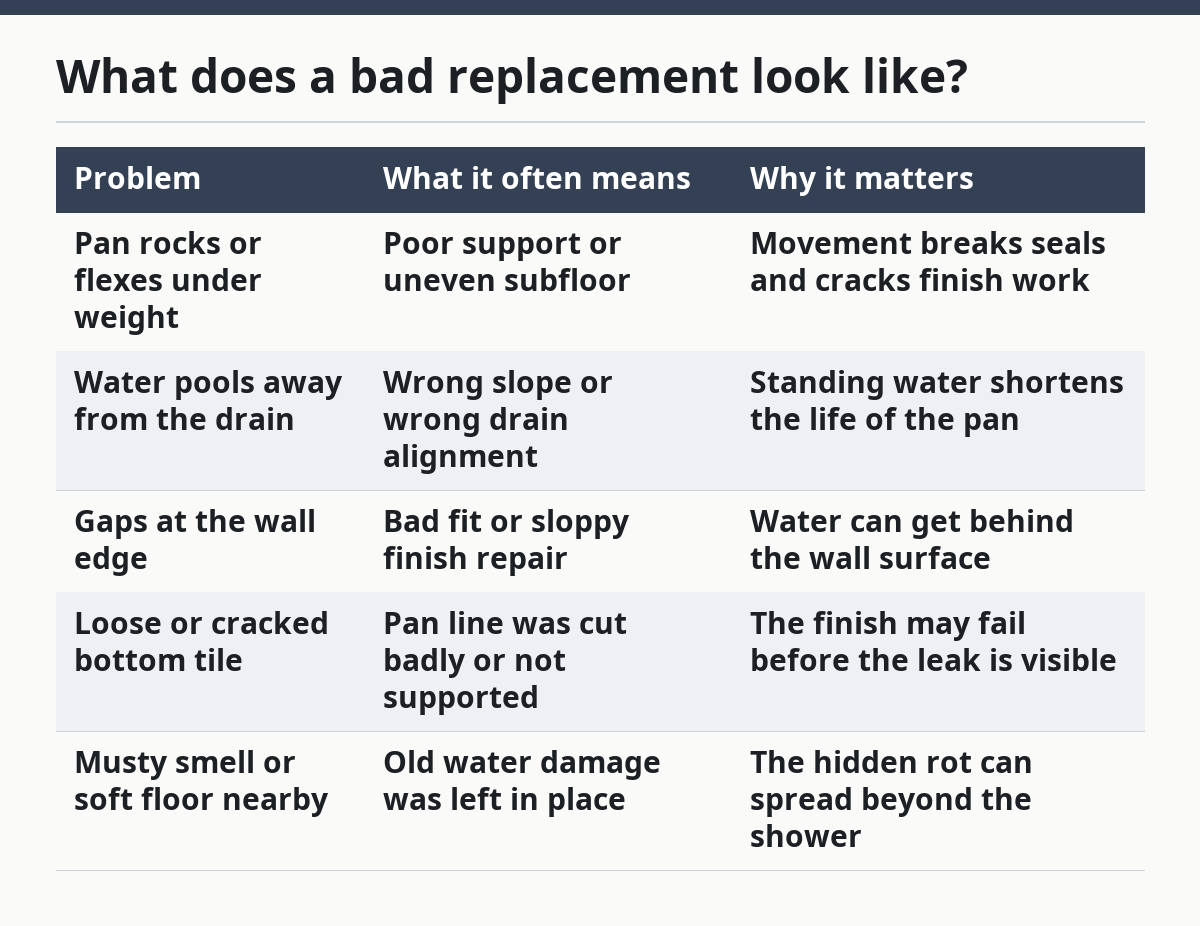
A shower pan job that looks neat on the outside can still fail if the drain seal is wrong. The drain is not just a hole in the middle of the pan; it is the point where the waterproof system meets the plumbing system. If that connection is off by even a small amount, the repair can leak into the subfloor.
The same is true for the waterproof membrane. If the membrane is cut too high, left loose, or not tied back into the new pan correctly, the shower may pass a quick visual check and still let water into the wall. That is why “replace the pan only” is not the same as “ignore the rest of the shower.”
What should you ask before hiring someone?
You should ask how they plan to handle the drain, the waterproof membrane, the subfloor, and the finish repair before anyone starts cutting tile. Those four points tell you whether the job is a real replacement or a patch.
Specifically, ask these questions in plain language:
- Will the bottom row of tile or wall panel come off?
- How will the drain be disconnected and reset?
- What happens if the subfloor is soft or damaged?
- How will the new pan tie into the waterproof membrane?
- What finish repair is included at the wall edge?
The answers should be specific, not vague. “We’ll see when we open it up” is normal as a first step, but there should still be a clear plan for what gets removed and what gets rebuilt. A contractor who cannot explain the drain setup or the membrane tie-in may be guessing.
Cost also changes with scope, but this page is not the place for a full price guide. What matters here is what drives the job bigger: hidden water damage, tile removal, access to the drain, and the condition of the subfloor. A shower pan replacement that stays inside the original footprint is one kind of job. A replacement that includes wall rebuilds, subfloor repair, and membrane work is a different one.
If you want the broader context for replacement and installation work, the shower pan installation and replacement hub is the better next stop. This page is the narrow answer: how to get the old pan out and the new one in without tearing apart the rest of the bathroom.
How long does the work usually take?
A shower pan replacement can take part of a day or several days, depending on how much finish work and drying time the job needs. The pan itself may come out fast, but the surrounding repair can stretch the timeline.
The quickest jobs are the ones with clear drain access, a sound subfloor, and little wall damage. Those jobs stay close to the shower opening. Once the lower tile, membrane, or subfloor has to be rebuilt, the work slows because each layer has to be set before the next one goes on. Drying time matters even when the visible work looks small.
A common mistake is to judge the job by the size of the shower opening. A small shower can still take longer than a larger one if the drain is hard to reach or the old pan was installed in a way that traps it behind the walls. The hidden parts decide the schedule more than the square footage does.
The right expectation is not “fast.” It is “as small as the damage allows.” If the subfloor is solid and the waterproof system is still usable, the replacement can stay limited. If not, the repair grows to match the problem.
FAQ
Can a shower pan be replaced without removing the walls?
Yes, sometimes a shower pan can be replaced without removing all the walls. The lower wall line usually has to come apart where the pan meets the wall, and that may mean the bottom row of tile or panel comes off. The upper walls can often stay if the waterproof system is still sound and the drain can be reset cleanly. For shower waterproofing details, see the Tile Council of North America: https://tcnatile.com/
How long does shower pan replacement take?
Shower pan replacement can take from a short job to several days, depending on access, damage, and finish repair. A simple swap with good drain access is much faster than a job that needs subfloor repair, membrane work, or tile patching. Drying time for repairs often shapes the schedule as much as the tear-out itself.
What has to be removed to replace a shower pan?
The shower pan, the drain connection, and anything that traps the pan at the wall line have to come out. That often includes the bottom row of tile or wall panel and sometimes part of the waterproof membrane edge. If the subfloor is damaged, that section may also need removal before the new pan can be reset.
Drafted with AI; not yet reviewed by a person.